Wittenborg University of Applied Sciences
Six months on student recruitment at a Dutch university, running the campaigns aimed at one market I happened to know from the inside, and promoting a new dormitory to students who had not yet decided where to study.
Measured
- +180%
The job
A university sells a decision that takes a year to make, costs more than a car and cannot be returned. Recruitment marketing is therefore not really advertising. It is answering, for one specific eighteen-year-old and usually their parents, whether moving to a town they have never visited is a sensible idea.
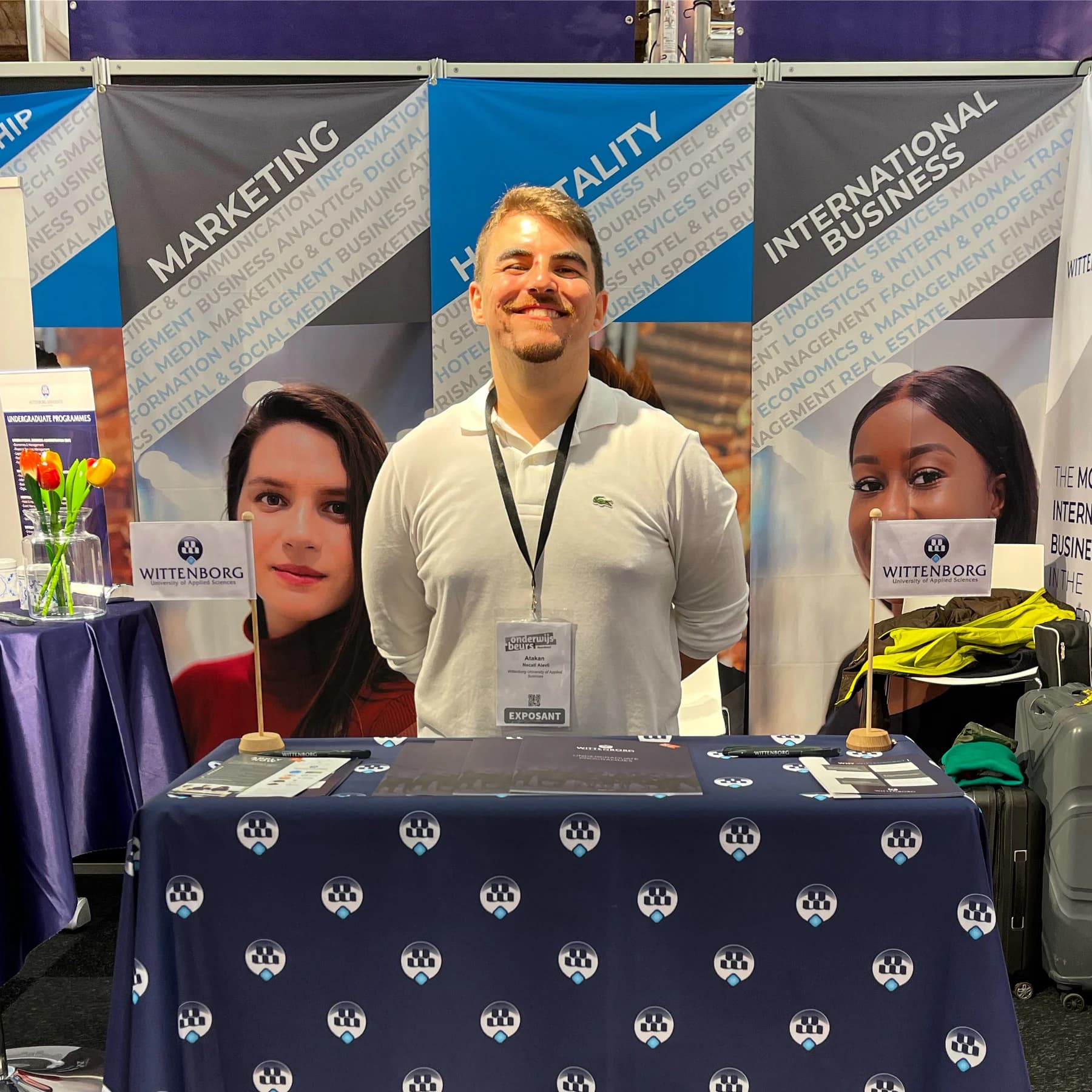
I spent six months on that at Wittenborg, in Apeldoorn, as a marketing and admissions intern.
What I did
Ran the student recruitment campaigns aimed at the Turkish market, which is the part of the job I was best placed to do: I am Turkish, I had made that exact decision myself, and I knew which of a Dutch university's selling points land in Ankara and which do not translate at all.
Alongside that, the promotion for a new dormitory. Housing is not a footnote in this decision. For an international student it is frequently the thing that settles it, because a course you want and nowhere to live is not an offer.
What changed
Turkish international admissions rose 180% over the cycle.
The honest reading is that a small base moves easily in percentage terms, and I have no way of separating the campaigns from everything else the university was doing that year. What I can say is which decisions were mine and why they were made, which is the part that transfers.
Afterwards
I was already a student at Wittenborg when I took the internship, partway through the Master of Business Management, awarded as an MSc, specialising in Digital Marketing & Communication. So for six months I was selling the place from the inside while studying in it. That made the marketing questions unusually concrete: every claim in a campaign was one I could check against my own week.
I finished the master's after the internship ended. What carried over was less the campaigns than the habit they forced: knowing which of an institution's selling points survive the trip to a specific market, and which only sound good in the building. That habit went straight into the work I have done since, from the Dopper festival season to the Google Ads accounts in Haarlem.