Takes
ChatGPT Ads in the Netherlands: should a local business advertise yet?
Since 31 August any Dutch business can buy ChatGPT ads itself, and the size of the audience decides nothing. Subscribers above the Go plan do not see the ads, context is not intent, and no benchmarks exist: a consumer service can test one buying cycle against a bad-case forecast, and a business selling to companies should assume its buyer never sees the ad.
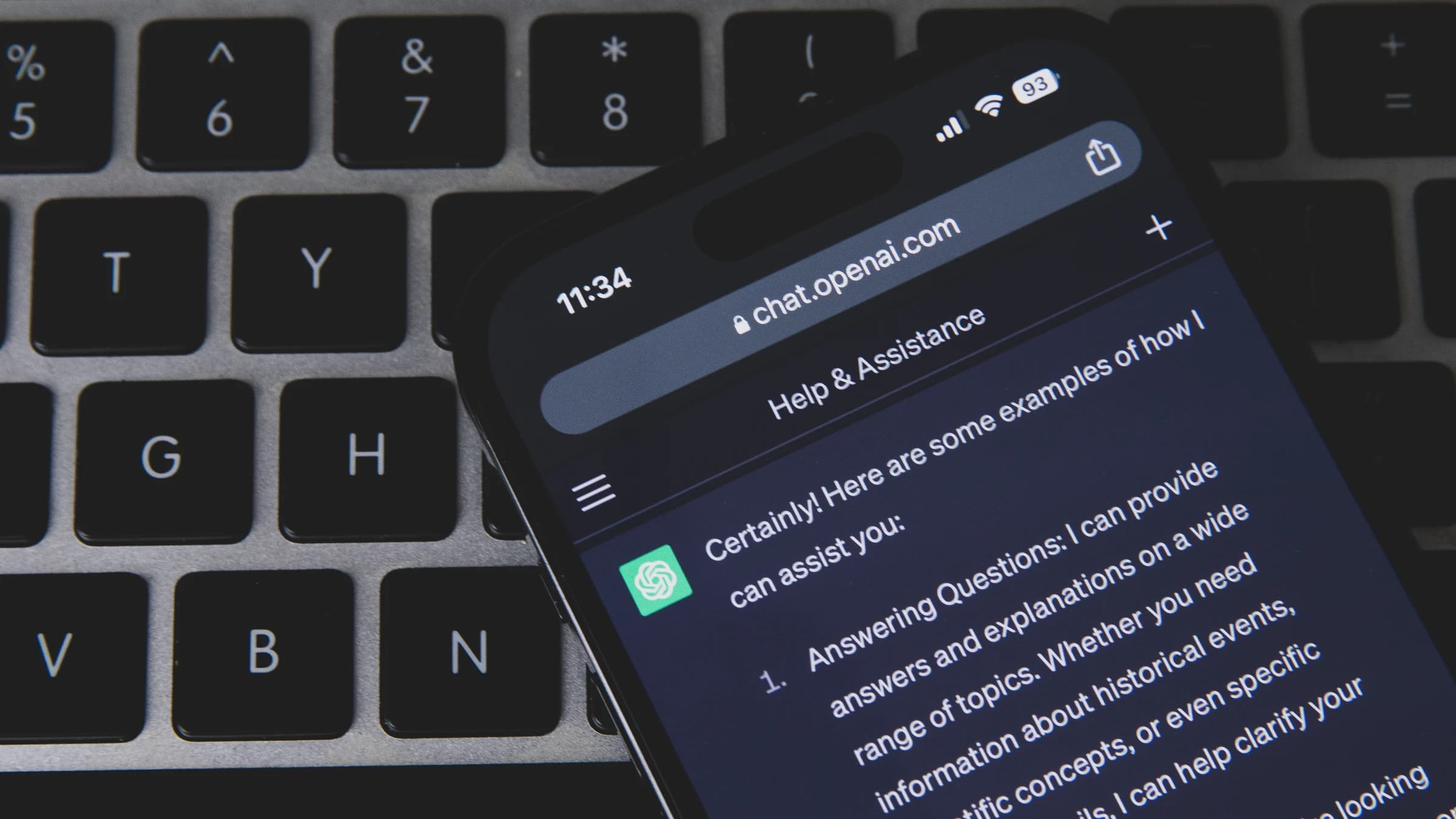
ChatGPT Ads in the Netherlands became a real option on 31 August 2026, when OpenAI opened self-serve access to its Ads Manager across 31 European markets (OpenAI). Ads had been showing to Dutch users since 24 August (Digiday); from the 31st, a Dutch business can open an account at ads.openai.com, pass verification, and buy a placement without an agency. The question for a local service business is not whether the audience is large. It is whether the three facts that actually govern the channel favour you.
What ChatGPT Ads are, in one paragraph
A ChatGPT ad is a clearly labelled sponsored unit shown below the assistant's answer when the conversation matches the advertiser's targeting: the advertiser's name and favicon, a title, a short piece of copy, an image and a link to a landing page (OpenAI Help Center). OpenAI says advertisers do not receive users' conversations and ads do not influence the answer itself (Search Engine Land). Ads are bought in an auction and billed per click or per thousand impressions, with a conversion-optimised option as well. Targeting starts from the conversation: the advertiser supplies context hints, which can include keywords but are not exact-match keywords, and can add location and custom audiences (OpenAI Help Center). The European rollout covers all 27 EU member states plus Norway, Iceland, Liechtenstein and Switzerland (OpenAI Help Center), and OpenAI says the ads business reached a $1 billion annualised revenue run rate in less than 200 days after launch (OpenAI).
Not every assistant has kept its ads. Perplexity stopped taking new advertisers in October 2025 and has since phased its ads out, Search Engine Land reported in February 2026, citing the Financial Times (Search Engine Land).
Fact one: Plus and Business subscribers do not see your ad
Ads appear only to users on the Free and Go plans. Plus, Pro, Business, Enterprise and Edu accounts do not have ads (OpenAI Help Center). For a consumer service, a dentist, a physiotherapist, a hair salon, that is workable, as long as the customers you want use ChatGPT on the Free or Go plan. For a business-to-business local service, an accountant, a commercial cleaner, an IT supplier, it is the deciding fact. The managing director who pays for Business will not see the card. The only way to reach that person inside ChatGPT is an organic mention, which is a different discipline with a different budget line.
Fact two: context is not intent
Search advertising works because "heat pump installer The Hague" is a buyer typing their situation. A ChatGPT conversation about heat pumps might be a homeowner comparing options, a student writing an essay, or an installer's own research. Context hints reach the topic; they do not filter for the moment of purchase the way an exact-match keyword does. OpenAI's head of global ads solutions told Cannes Lions in June 2026 that "roughly 20% of queries in ChatGPT have a direct commercial intent" (Marketing Dive). That is a large audience and a mostly out-of-market one, which makes it closer to the 95:5 rule's 95 than to search's 5. Plan it as a reach channel with a click attached, not as search with a new logo.
Fact three: no benchmarks means bad case first
There is no reliable Dutch CPC data for ChatGPT Ads yet, no conversion-rate history, and no lead-to-customer rate for clicks that arrive from a conversation rather than a query. Every input in a forecast is a guess. That is exactly the situation the bad-case forecast is built for: run the chain three times, bad, base and good, with a deliberately wide range, and sign against the bad case.
For a first test, the honest inputs look like this. Start from OpenAI's recommended opening bid, a maximum of $3 to $5 per click (OpenAI Help Center), and set the bad-case CPC at double the top of that range: $10. Buy on clicks for this first test, because the forecast chain starts from clicks. Take your search conversion rate and halve it for the bad case, because context is not intent. Take your real close rate from bookings. Take contribution per customer from the margin-back budget you already have. If the bad case cannot clear the market test at those inputs, the channel is not for you yet, and you have spent nothing finding out. If it can, size a test that lasts one full buying cycle and count bookings from your own records, never from the platform's dashboard.
What to prepare before the first euro on ChatGPT Ads in the Netherlands
Start account verification before you need the account. OpenAI publishes no timeline and says only that it may take some time; it can ask for the company's legal name and registration number, and payment is by credit card (OpenAI Help Center). Build a landing page for the conversation, not the keyword: the visitor arrives mid-thought, so lead with the situation they were discussing. Put the ChatGPT click in your CRM or booking system as its own source, because the platform will report clicks and your business will report patients, and only the second number pays the invoice.
Frequently asked questions
- How much do ChatGPT ads cost in the Netherlands?
Ads are sold in an auction and billed per click or per thousand impressions. OpenAI's help centre recommends starting with a maximum bid of $3 to $5 per click; until your own data exists, treat double the top of that range as the bad case in any forecast.
- Who sees ChatGPT ads?
Only users on the Free and Go plans, in the markets where ads run, which since August include the Netherlands. Plus, Pro, Business, Enterprise and Edu accounts do not have ads.
- Do ads change the answers ChatGPT gives?
OpenAI states that ads are kept separate from answers, clearly labelled, and do not influence the response.
- Are ChatGPT Ads in the Netherlands worth it for a small local business?
Consumer services whose customers use the Free or Go plan can run a bad-case forecast and test for one buying cycle. Business-to-business local services should assume their buyer never sees the ad and put the budget into organic visibility instead.
Sources

Necati Atakan Alevli