Topic
Agency operations
The mechanics of running a marketing agency: pricing, retention, what a client is actually worth, and the decisions that do not appear in case studies.
 FrameworksThe Alevli filterAn AI marketing framework that decides whether a given use of AI or persuasion is acceptable by asking four questions in order, can the customer see it and refuse it, would they expect this use of what you know about them, does a named person stand behind it with sources, and can a human stop it and measure it, and grading the use by its weakest answer, so that the verdict follows the lines drawn by EU law and by the customer’s own expectations rather than by taste.
 FrameworksThe Alevli gapAn expectation-management model for positioning built on one law, that satisfaction equals delivery minus expectation, which makes positioning the act of setting your promise at the highest level you can still beat on a bad week.
 FrameworksThe bad-case forecastA forecasting method that chains a marketing budget to revenue in four multiplications, runs the chain as bad, base and good scenarios across a three-month ramp, and sets the owner's expectation at the bad case, because a business that can live with the worst realistic outcome can hold its nerve long enough to reach the good one.
 FrameworksThe margin-back budgetA budgeting method that derives an SMB's marketing spend backwards from its own prices, margins and capacity, where contribution per customer sets what a lead may cost and capacity sets how many leads to buy, instead of picking a percentage of revenue that fits no business in particular.
 FrameworksThe spend floorThe minimum monthly budget below which a campaign cannot gather enough conversion data to optimise, calculated as the bidding algorithm's learning threshold multiplied by a realistic cost per lead rather than guessed.
 FrameworksJobs-to-be-DoneA research method that defines a market by the progress customers are trying to make rather than by product category, so competitors include everything else that gets the same job done.
 FrameworksThe STP sequenceThe order of operations that segments a market, chooses which segments to pursue, and only then writes positioning, because positioning written before targeting is written for nobody.
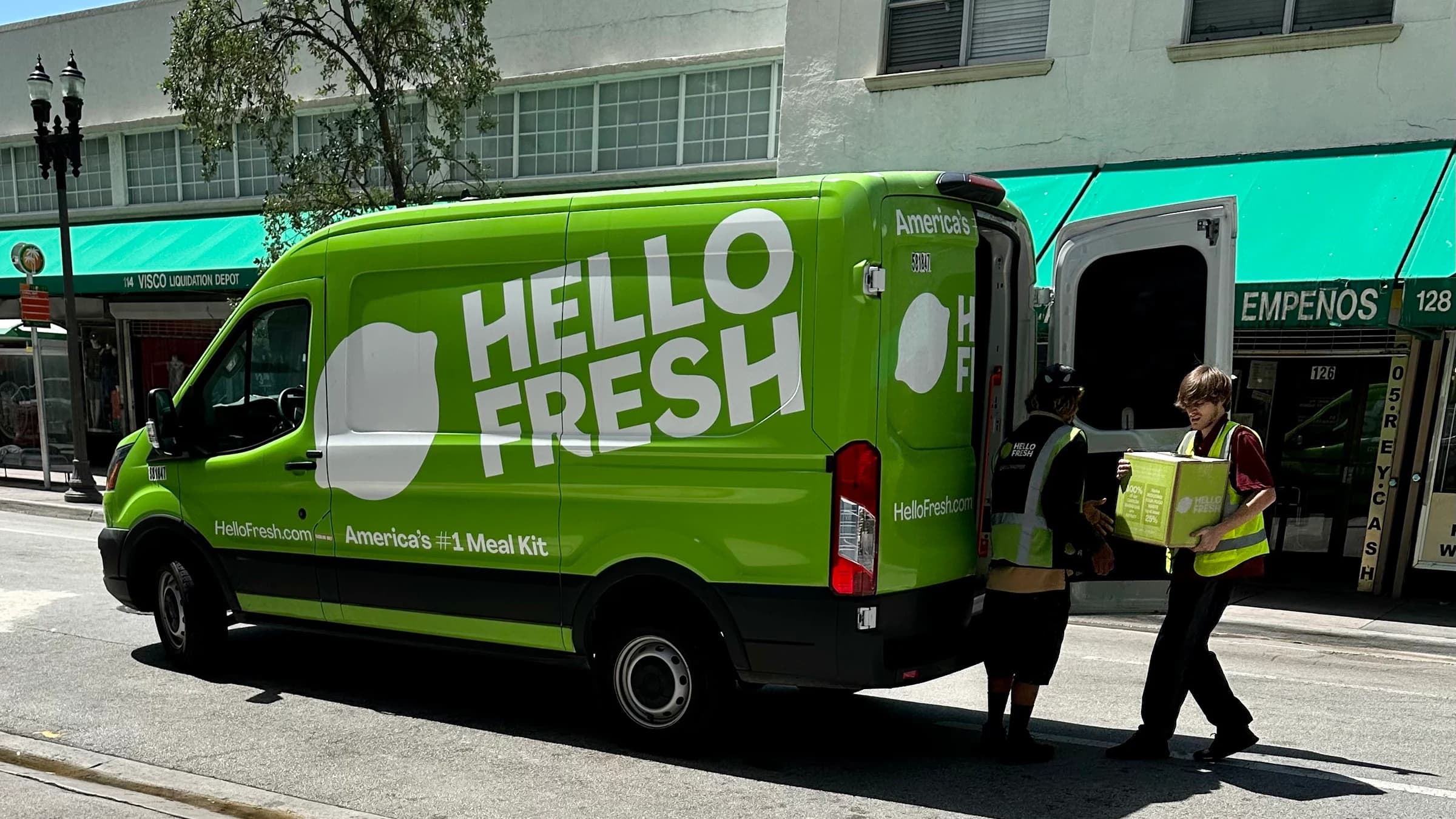 TakesHelloFresh failed the market test at €7 billion, then passed itBernstein put HelloFresh's lifetime value to acquisition cost at 0.8x in 2022: it was paying more for a customer than the customer paid back. That is the margin-back budget's failure condition, at €7 billion of revenue rather than €180 a contract. The correction was the model's own prescription: fix the inputs before buying more leads.
 TakesQuibi had no bad case at allQuibi raised $1.75 billion, projected more than 7 million subscribers in year one, and shut down after six months with about 500,000. The detail that matters is a word: in investor presentations, 20 million subscribers was the base case. When the base case is the good case, the bad case is missing by construction.
 TakesPeloton published the good case and called it the planIn August 2021 Peloton guided $5.4 billion, no range, no bad case. It cut in November, cut again in February, and closed the year at $3.58 billion, 34% below the first number. Each cut was received as a betrayal because no scenario existed for it to land in. The same equation runs inside a company, pointed at its own forecasts.
 TakesCyberpunk 2077 shows what expectation debt costs, itemisedEight million pre-orders covered the whole cost of the game before a single review. Eight days after launch Sony delisted it and refunded buyers, and the shares fell 43% from their peak. Expectation debt is the only zone where a product is a commercial success on day one and a liability by day eight.
 TakesDisney runs the beatable band as a daily operating systemJoin a 60-minute queue at Walt Disney World and you will very likely be out in 40. Independent measurement puts actual waits at 55 to 71% of posted times, averaged across the four parks. That is a promise set at bad-week delivery, and a surplus handed to every guest at a cost of zero.
 TakesDomino's lowered the bar, then cleared itIn December 2009 Domino's told the public its pizza was bad, and same-store sales rose 14.7% the next quarter. Read through one equation, satisfaction equals delivery minus expectation, the campaign was not honesty for its own sake. It moved the promise below the pizza.
 TakesExpectation management case studies: six brands, one equationThe most-cited turnarounds and collapses of the last fifteen years were expectation events, not product events. Six cases with public numbers show the same arithmetic that runs a €2,000-a-month campaign for a dental clinic.