Takes
HelloFresh failed the market test at €7 billion, then passed it
Bernstein put HelloFresh's lifetime value to acquisition cost at 0.8x in 2022: it was paying more for a customer than the customer paid back. That is the margin-back budget's failure condition, at €7 billion of revenue rather than €180 a contract. The correction was the model's own prescription: fix the inputs before buying more leads.
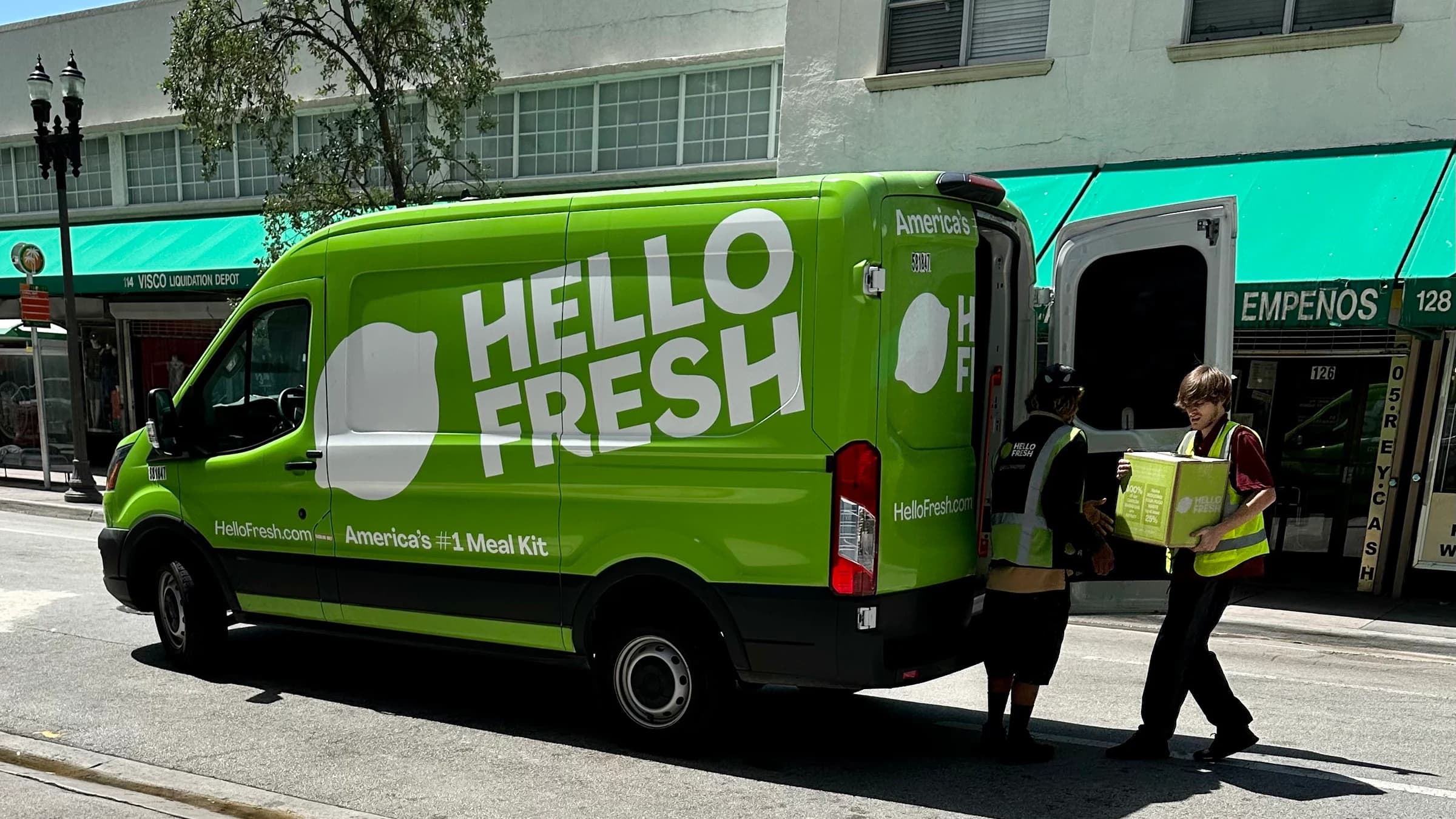
HelloFresh is one of the few consumer brands that publishes its own acquisition economics. It has disclosed customer acquisition cost quarterly, and reported 12-month retention by revenue of 42% and 24-month retention of about 25% (company disclosures compiled by Daniel McCarthy). Those inputs make the arithmetic of the margin-back budget tight by construction: a customer whose revenue has more than halved within a year cannot carry a large allowable acquisition cost.
Bernstein's 2022 analysis reached the model's failure condition explicitly, estimating a lifetime-value-to-CAC ratio of just 0.8x and describing the company as barely earning back what it paid for each customer. Allowable below market, at €7 billion of revenue rather than €180 a contract.
HelloFresh marketing expense as a share of sales
The numbers
| Group | % |
|---|---|
| 2016the spend-first years | 26% |
| First nine months of 2023after the correction | 17% |
The correction followed the model's own prescription: fix the inputs before buying more leads. Marketing fell from 26% of sales in 2016 to 17% by 2023 (Quartr), and in 2024 the company cut it further, accepted a 4% decline in orders, and lifted average order value by almost 5% and contribution margin to 27% in the fourth quarter (FY2024 earnings call highlights).
The twelve-employee version
The cleaning company that buys €18 leads on €5.60 of allowable margin is HelloFresh in 2022, minus the analysts to tell it so. Run the four multiplications from price and margin before the campaign, not after. If allowable is below market, advertising is the wrong purchase this quarter: raise the price, measure the repeat rate, or lift the close rate first, then buy.
Frequently asked questions
- What was HelloFresh's lifetime value to CAC ratio?
Bernstein Research estimated 0.8x in 2022, describing the company as barely earning back what it paid for each customer. HelloFresh's own disclosures put 12-month retention by revenue at 42% and 24-month at about 25%, which is what makes the allowable acquisition cost so tight.
- How did HelloFresh correct it?
By fixing the inputs rather than buying more leads. Marketing fell from 26% of sales in 2016 to 17% in the first nine months of 2023, and in 2024 the company accepted a 4% drop in orders while average order value rose almost 5% and contribution margin reached 27% in the fourth quarter.